
Fear Is a Choice: Forty-Five Years of Tech Waves Taught Me That
Listen to the blog article here: VLOG
I've been in technology for forty-five years. I've watched the industry transform over and over, and every single wave followed the same pattern: fear, resistance, then explosive growth for those brave enough to lean in. AI is no different. But here's what I know that the doom-and-gloom headlines won't tell you: fear is manufactured, and you have more control over your future than you think.
I started my career building printed circuit boards on an assembly line. I was literally soldering the hardware that would become the foundation of the personal computer revolution. When IBM clones came out, suddenly computers weren't locked in corporate data centers, they were on every desk. That was exciting. Nobody panicked. We just learned.

Then came the shift from mainframes to networking. This is where I started to see something important. The mainframe was a legacy dinosaur, and companies like IBM were clinging to it because they'd invested billions. But networked PCs could do similar work for a fraction of the cost. There were political battles, sure. People fought it because their careers depended on the old way. But the economics won. The technology won. And the people who leaned in thrived.
I made a pivot myself around that time. I'd been in hardware repair, we were fixing monitors, replacing components, chasing an endless treadmill of new gear. But I saw something shift. Hardware became disposable. You didn't repair a monitor anymore; you threw it out and bought a new one. That wasn't interesting to me. But software? Software was where I saw the real patterns emerging, the real leverage, the real future. So I moved toward it. It was one of the smartest decisions I ever made.

Then came the Internet. And everything changed again.
In the late nineties and early two thousands, I was doing global email migrations for law firms, managing rollouts across fourteen countries. The Internet wasn't everywhere yet, so we had to get creative. We'd build servers, extract the hard drives, and literally courier them across borders in cases, sometimes through customs, because there was no infrastructure to move the data digitally. We'd plug them in on the other side, reconfigure the IP addresses because the system thought it was still in New York when it was now in Prague, and hope it worked.
It was chaotic. It was ingenious. It was exhausting. But it was also the moment I knew, the Internet was going to change everything. I could see the bridges being built in real time. The US was connected. The outlying countries were coming online. And when everything finally linked up? The whole game transformed. Suddenly, software wasn't bound by geography or hardware limitations. It could scale globally in ways we'd never imagined.
The complexity spiraled from there. We went from emulation boards that let you see mainframe data on a PC, to actual networked software, to connected systems everywhere. Email evolved from Exchange to Gmail to cloud infrastructure. We added instant messaging, then chat platforms, then texting, then video calls. Layer upon layer of complexity, all solving real problems, all adding real value. But somewhere along the way, we hit overload.
That's where we are now. And that's why AI isn't a threat, it's a solution.
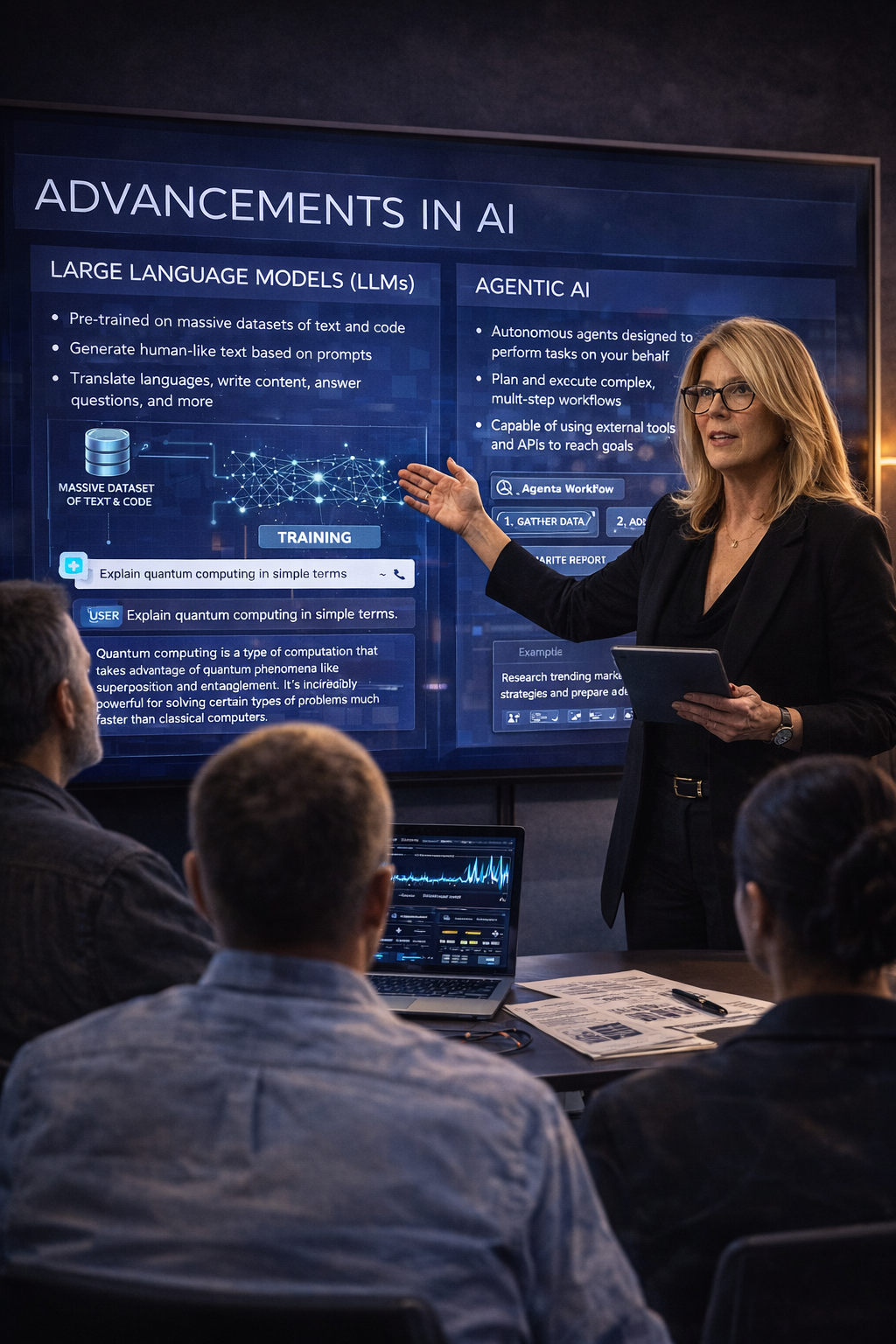
I saw this clearly when I recently had to audit an application built by another development team. To truly understand someone else's code, you'd normally need a team: someone who knows DevOps, someone who understands the Azure backend, someone versed in databases, someone who gets the front end. That's expensive. That takes weeks. That's people you probably can't afford.
But with AI? I could give it access to the repositories, the Azure environment, the whole system. And it could see what I couldn't see alone. It could digest thousands of lines of code and tell me: Here's how this works. Here's what it does. Here are your security risks. Here's whether it's ADA compliant. Here's the summary.
But here's the thing, and this matters, I didn't just accept the first answer. I questioned it. I asked: "Are you just fixing what's already broken, or is there a better way to design this?" And when I pushed back, when I asked it to evaluate best practices instead of just patching problems, it went deeper. It came back and said: "No, this data storage design isn't right. Here's how I'd rebuild it." And suddenly, before we went live in production, we had the chance to fix structural problems that would have cost us ten times more later.
And here's what's wild, just this week, both OpenAI and announced they're holding back their latest AI releases for cybersecurity and code analysis because they're too effective. They don't want that level of capability floating around in the wild yet. I'm sitting here having already experienced what that power looks like. I watched AI see into my system architecture in ways that would've required a five-person specialist team. And the versions they're restricting are even better than what I just used. That's the pace we're in. That's the capability we're building toward. That's exactly why this moment matters.
That's the partnership. That's the power.
Every wave of technology I've lived through has followed this arc: complexity builds, we hit a wall, we invent a tool to manage it, and then we see what we couldn't see before. We fix things. We get smarter. We move faster. And we create space to actually live our lives instead of drowning in busywork.
Right now, people are working too many hours. We're drowning in complexity we created ourselves. AI can help us climb out. But only if you choose to lean in.
You can fight this wave like people fought the Internet, like they fought the shift from mainframes to PCs, like they resisted every other transformation. You can blame fear, blame your age, blame the economy, blame "the way things have always been done." You can find a thousand reasons to resist.
Or you can do what I've done for forty-five years: get curious. Learn. Ask questions. Don't accept easy answers. Push back. Dig in. Understand not just what the technology does, but why it matters and where it's headed.
Because here's what I know: the people who thrived through the mainframe era were the ones who learned networking. The people who thrived through the Internet wave were the ones who got online. The people who'll thrive in the AI era will be the ones who lean in, stay curious, and use it as a tool to see what they couldn't see before.
This isn't about replacing humans, it's about giving us back our time, solving problems that matter, and building better lives. I chose curiosity forty-five years ago, and I'm still here, still excited, still learning. The wave is coming. Are you going to ride it, or let it pass you by?
If this resonated with you, I built something for exactly where you are right now. The Certified AI Project Strategist™ (CAPS™) program is my answer to the fear and the noise, a practical, grounded certification that helps professionals at every level lead AI projects with confidence. Whether you're non-technical and stepping into AI leadership for the first time, or you're technical and ready to sharpen your AI strategy and governance skills, CAPS™ meets you where you are. Because curiosity without a framework only gets you so far. Let's give you both. Find out more at nebulaacademy.com.